
The problem
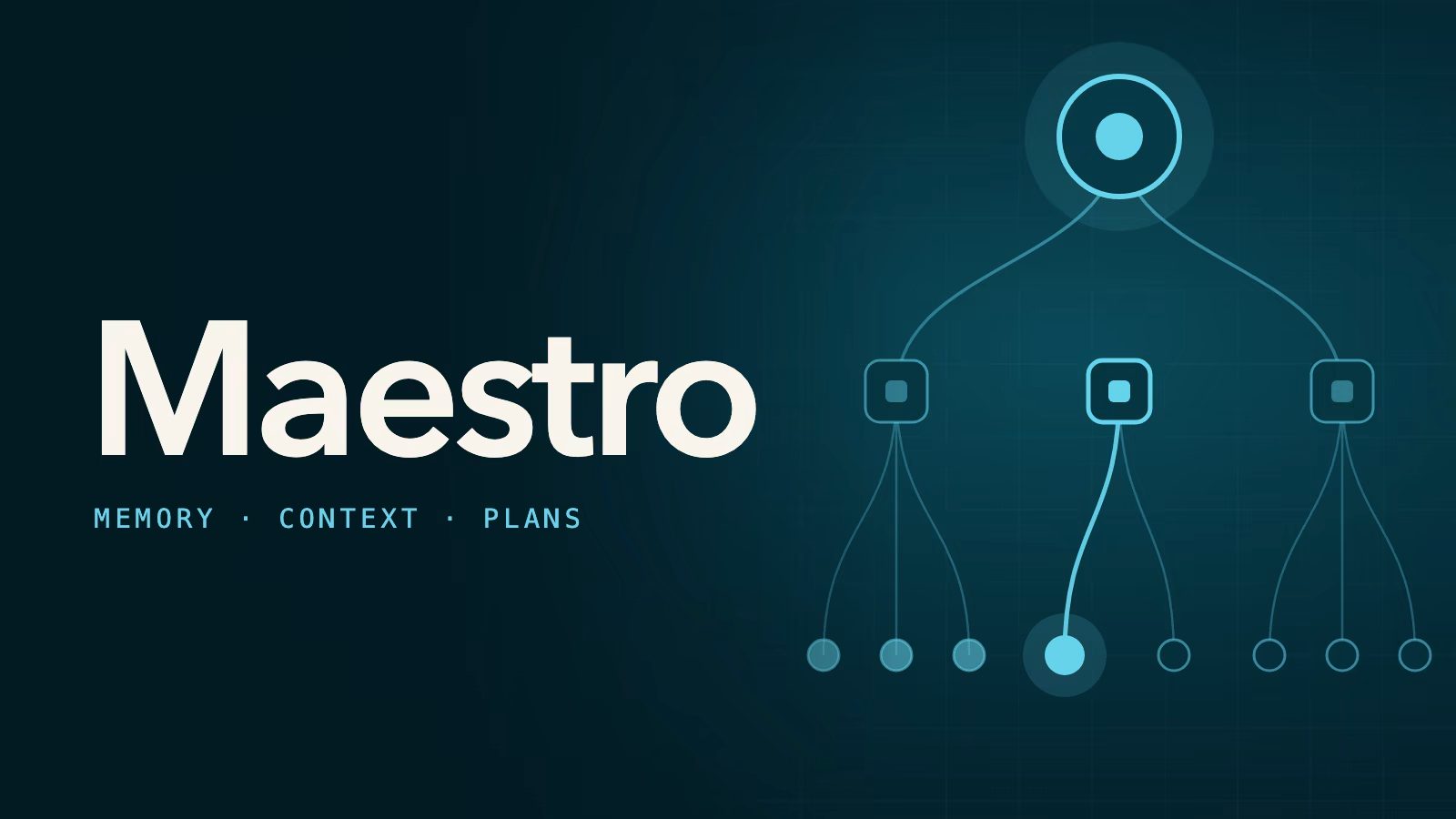
AI coding agents forget. Each chat starts cold, and moving work between Claude Code and Codex loses the plans, decisions and review history behind it. Maestro gives every agent the same durable record of a project.
One audited source of truth
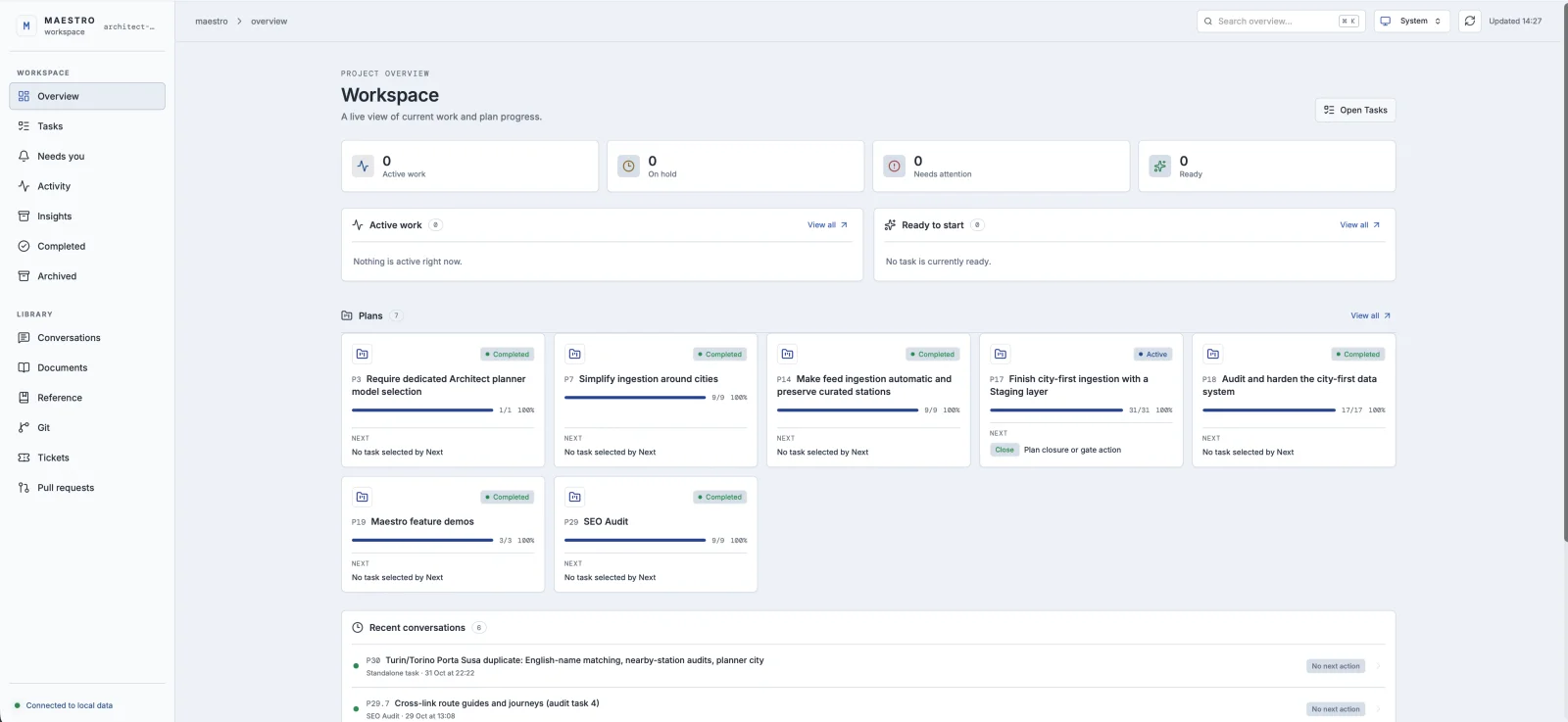
Requests, plans, executions, reviews, ToDos and Warnings live in a project-local SQLite database, written through a Python helper that uses only the standard library. There is no cloud service or account.
Each write is a single transaction: current state and its append-only audit event commit together or not at all. Retries with the same event ID never duplicate work, and foreign keys prevent orphaned records.
Plans that outlive the chat
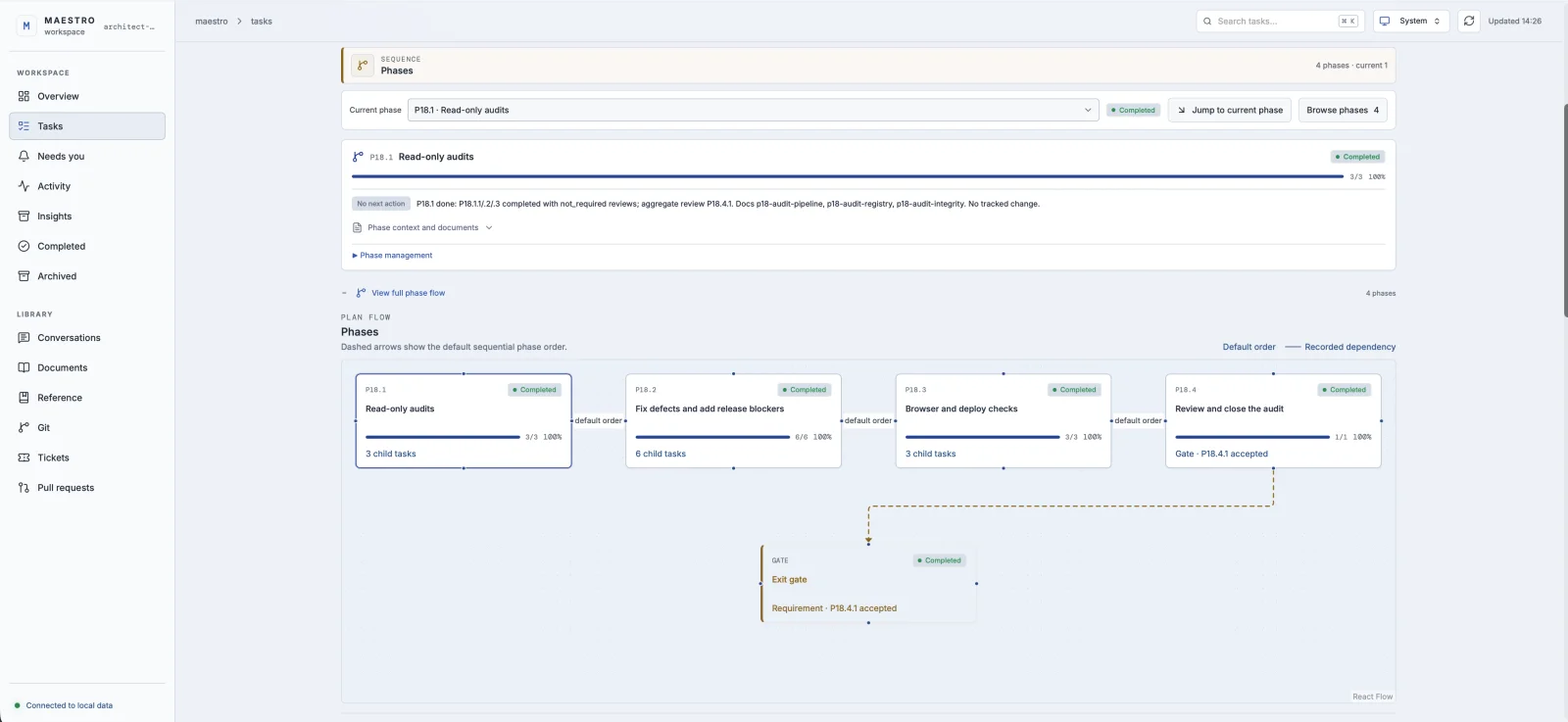
One initiative keeps one root plan across chats, split into phases and work units with stable codes such as P3.1. A single command reports which role each task needs and the one to take next, so any agent can resume exactly where the last one stopped.
Controlling what each agent sees
The Architect layer defines Planner, Worker and Reviewer roles once and shares them between Claude Code and Codex. Only the root agent touches memory. Subagents receive scoped briefs and return reports, and they read only the reference documents for the area they will change.
An automatic handoff stops work at a safe point when usage limits run low, so a session can end without losing its place.
A workspace for people
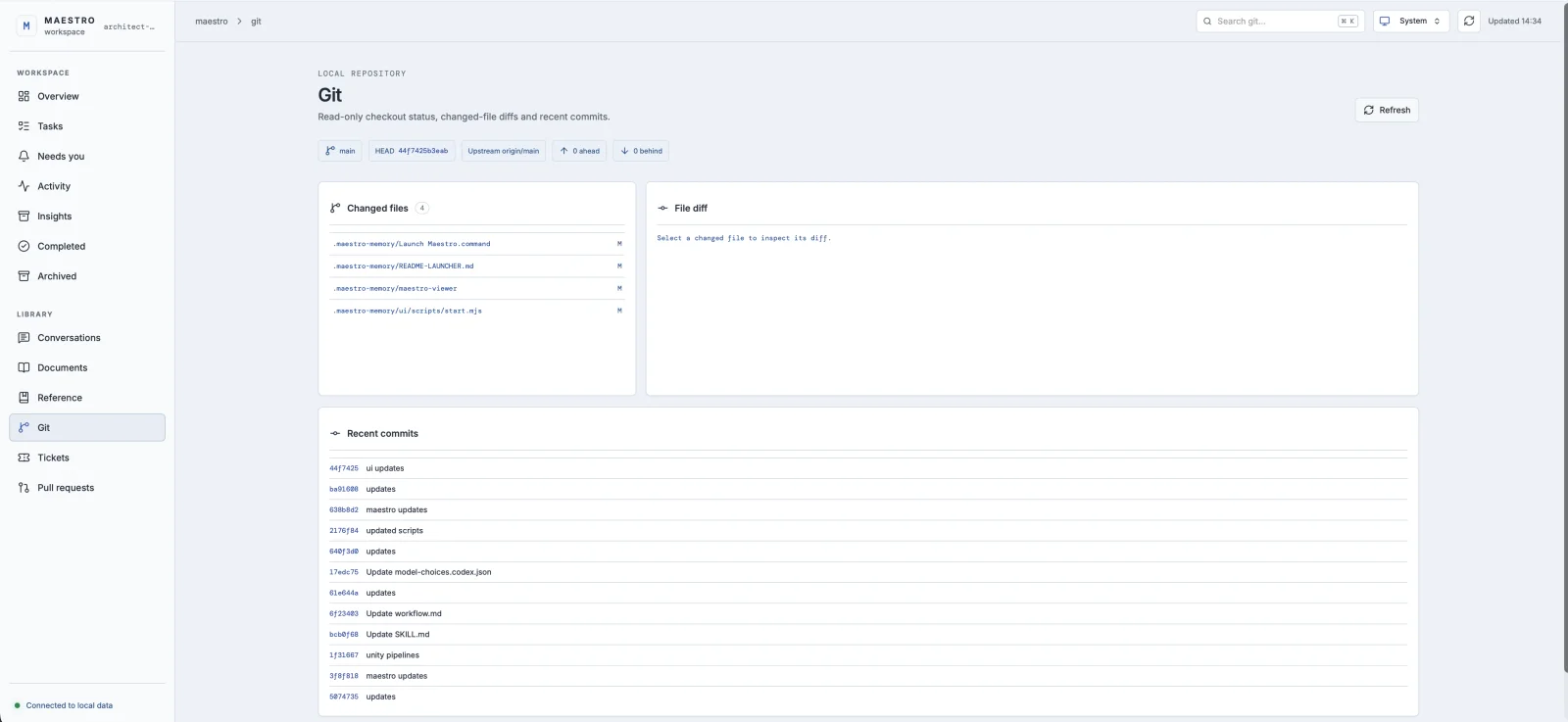
A React workspace shows live tasks, items that need a decision, activity, conversations, documents and insights, alongside Git, GitHub issues and pull requests. It can also drive Codex and Claude Code sessions through their native protocols, with permissions kept interactive.
In production use
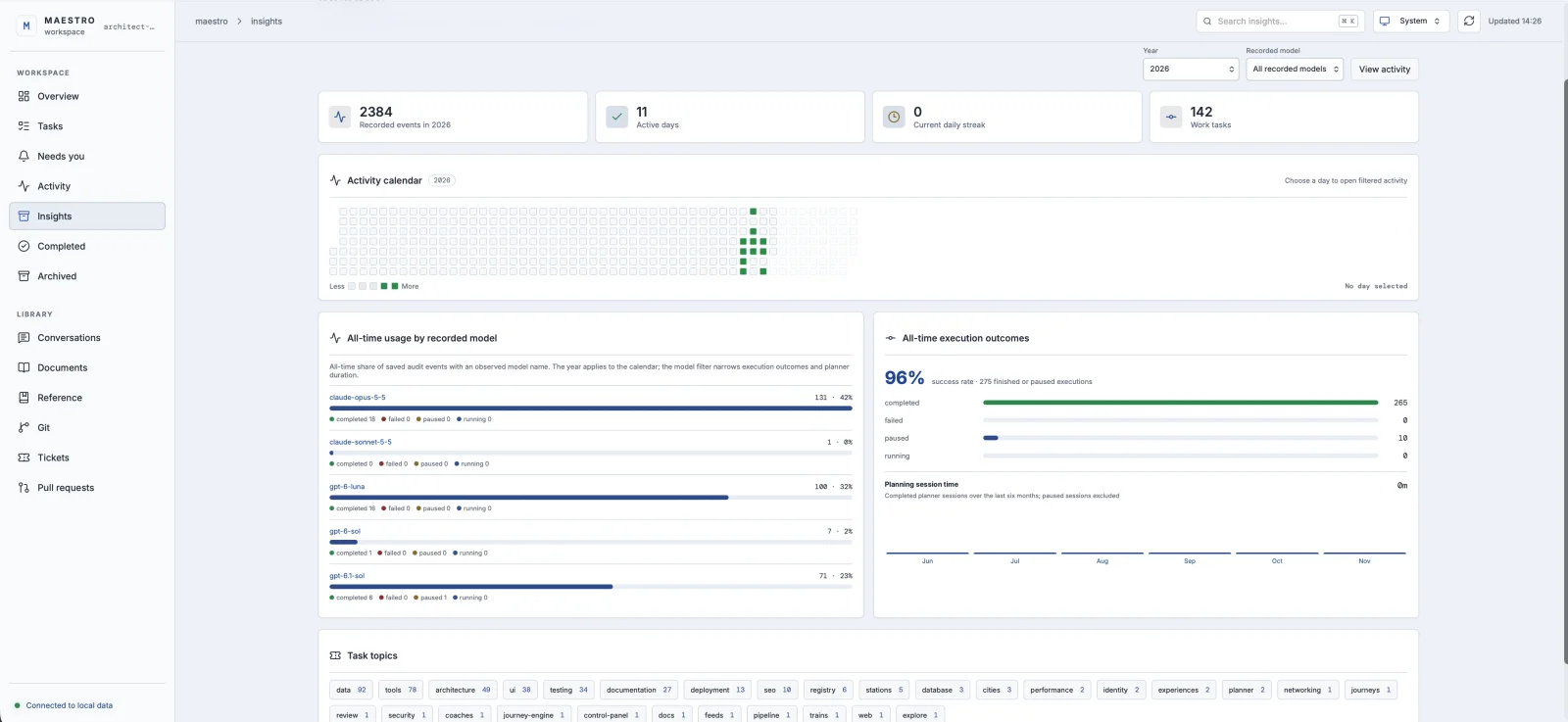
Maestro has run the development of Trainlink.eu, where its record holds 184 tasks and 2,384 audited events across Anthropic and OpenAI sessions.