
The production problem
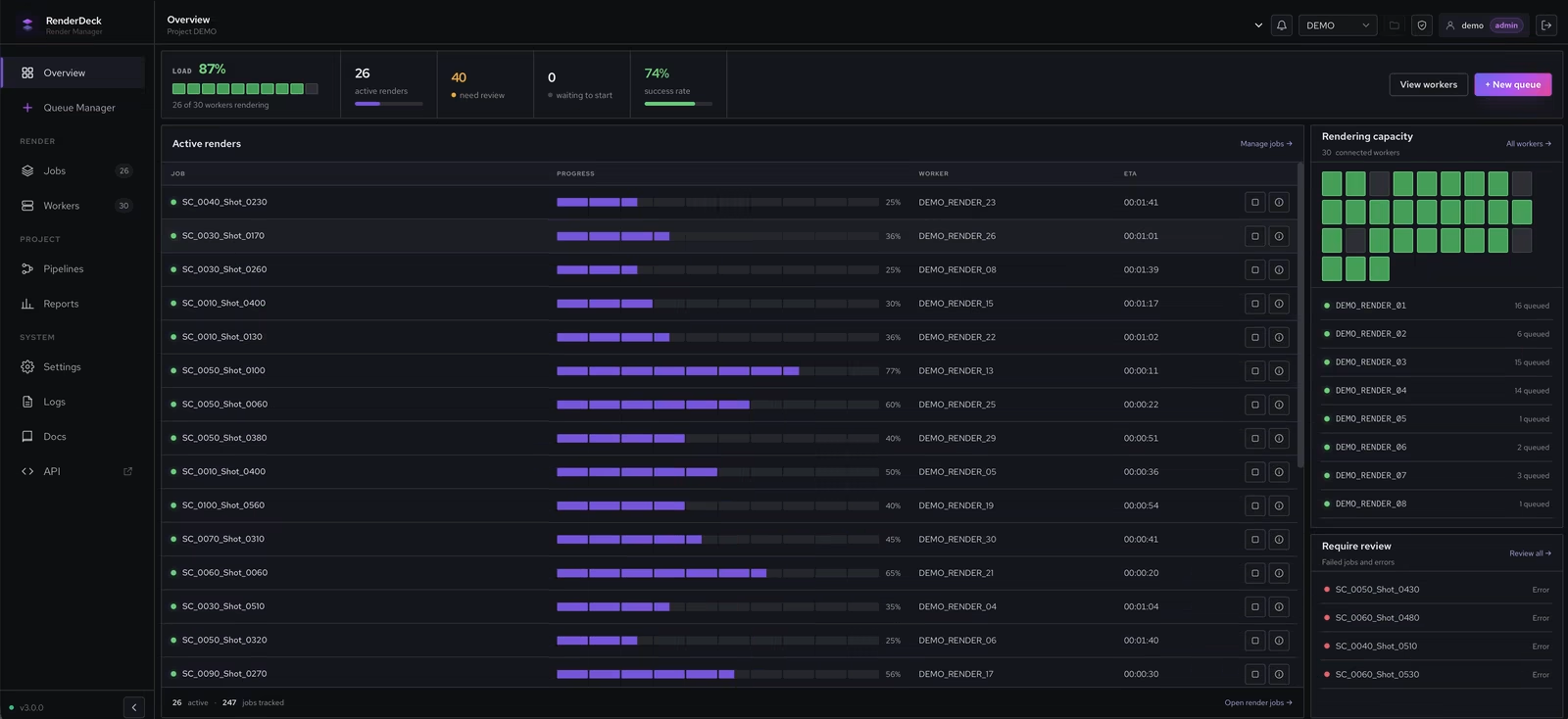
Cinematic rendering takes more than pressing render. Teams have to submit shots, set priorities, track progress and recover from failures while keeping versions and paths aligned with production. RenderDeck grew out of an internal render farm I built and deployed at HAZIMATION.
In-house control of the queue
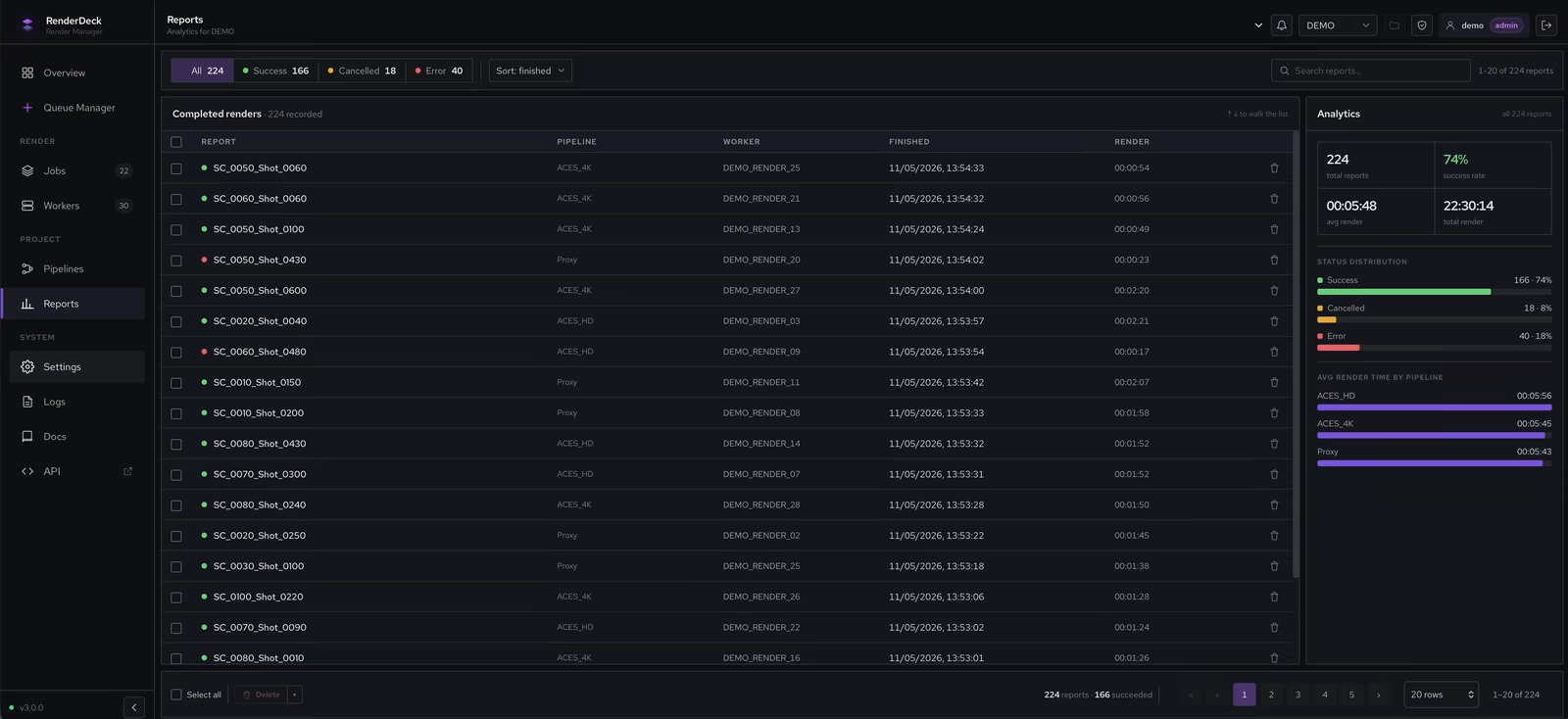
I designed RenderDeck to replace third-party render management with functionality built for production needs. A browser interface handles shot submission, queue management, reporting and version-aware rendering, taking the technical overhead of distributed rendering away from artists.
Workers that recover on their own
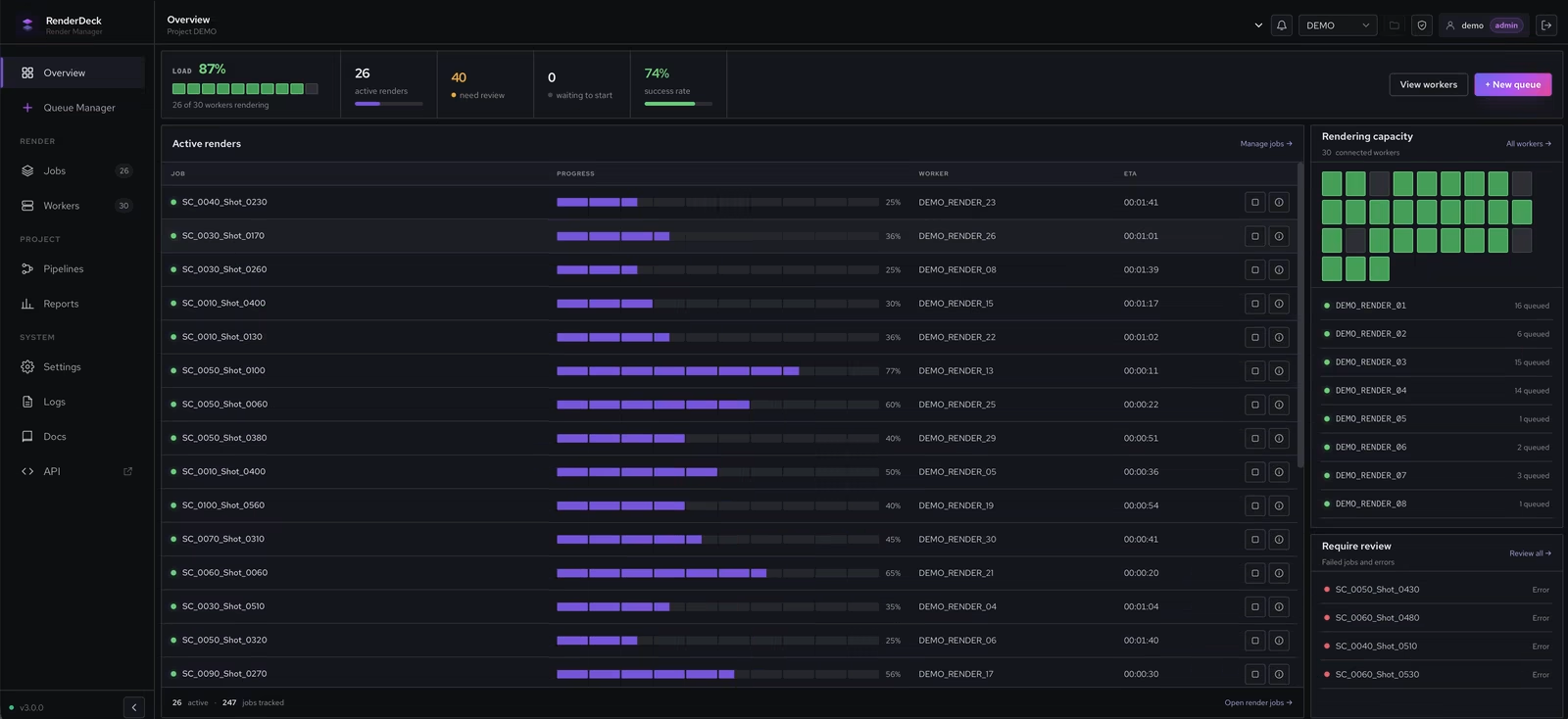
The system automates dispatch, worker assignment and job prioritisation, and shows live frame progress. It detects failures, re-queues jobs and reports worker CPU, RAM and GPU usage, so production can see exactly how work is moving.
Deep Unreal integration
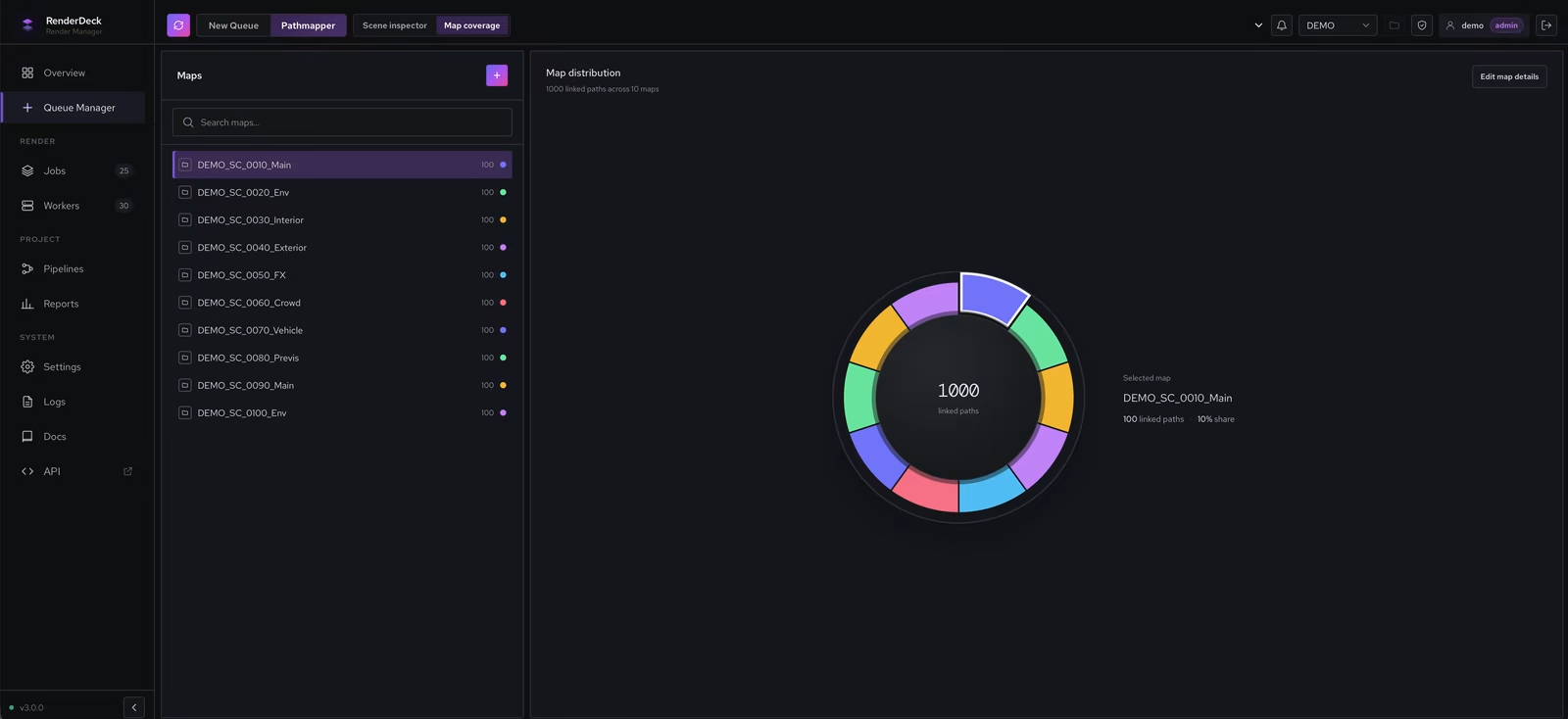
Rendering runs through Movie Render Queue, command-line workers and in-engine Python. Production path mapping and Perforce-based workflows tie every render job to the assets and versions the team is using.